Most feeding calculators ask what your pet weighs and divide up the bag from there. The problem is obvious once you say it out loud: two dogs at 30 kg can need very different amounts of food — one lean and muscular, one carrying 6 kg of fat it shouldn't be.
Body condition score is how you tell those two apart. It is a hands-on assessment, it takes about thirty seconds, and it is the single input on this site that most changes your answer.
How we label our evidence
- Source-supportedStated directly in the cited institutional publication.
- Our editorial guidanceA conservative reading of the evidence applied to a caregiver decision. Not a validated clinical protocol.
- Evidence gapWe could not verify this in our approved sources, so we have not invented a number.
The three checks
Do these with your hands, not your eyes. A thick coat hides a great deal.
- Ribs. Run your palms flat along both sides of the chest. At ideal condition the ribs feel like the back of your hand when you run a finger over the knuckles — present, distinct, with a thin covering. If you have to press to find them, there is too much fat over them. If they feel sharp and there is nothing over them at all, too little.
- Waist, from above. Stand over your pet and look down. There should be a visible narrowing behind the ribcage, before the hips.
- Abdominal tuck, from the side. The belly line should slope upward from the bottom of the ribcage toward the hind legs, rather than running straight across or hanging down.
Where your pet fits
Dogs
Compare against both views — side and above. The from-above waist is what people most often miss.
Thin BCS 3/9
-20% vs ideal
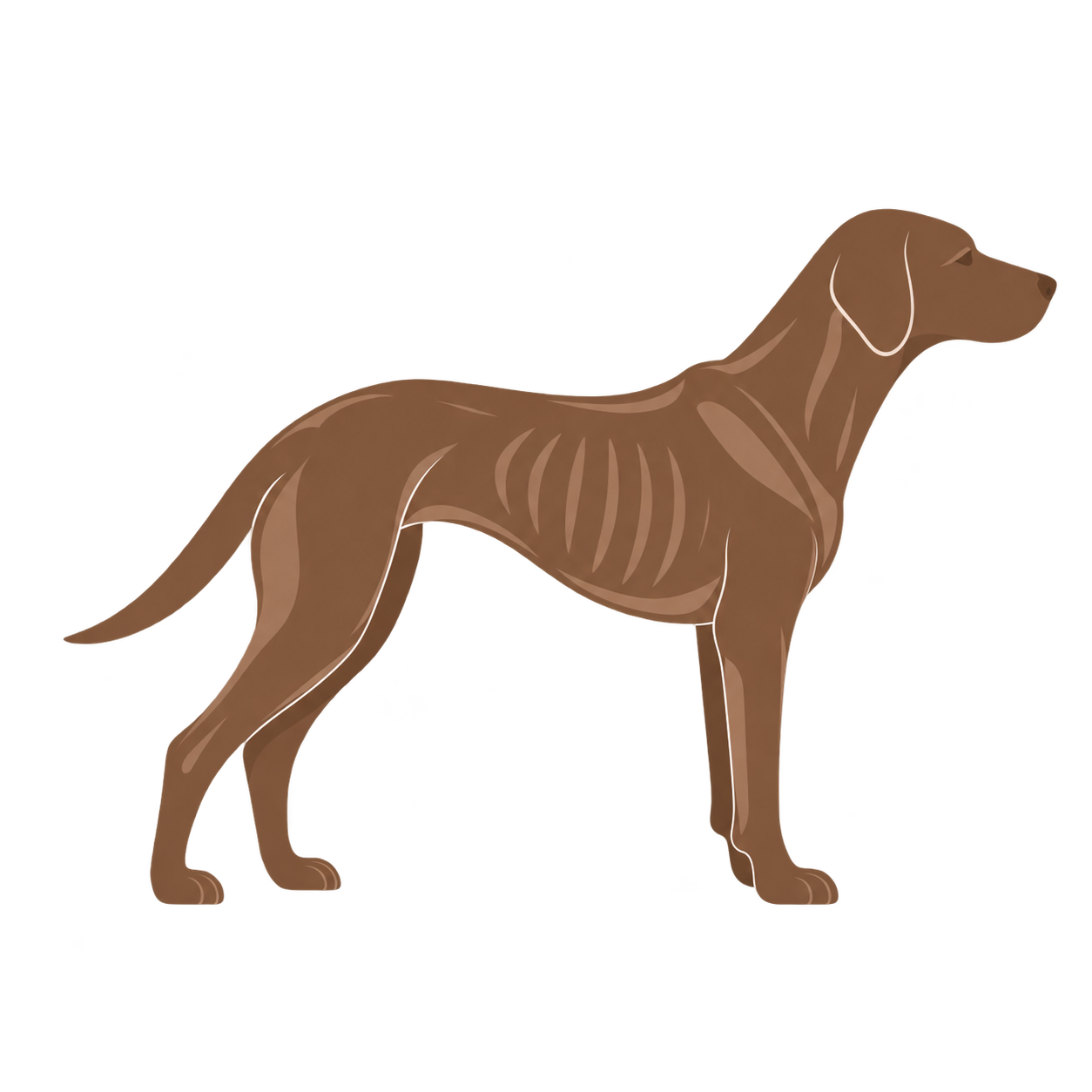
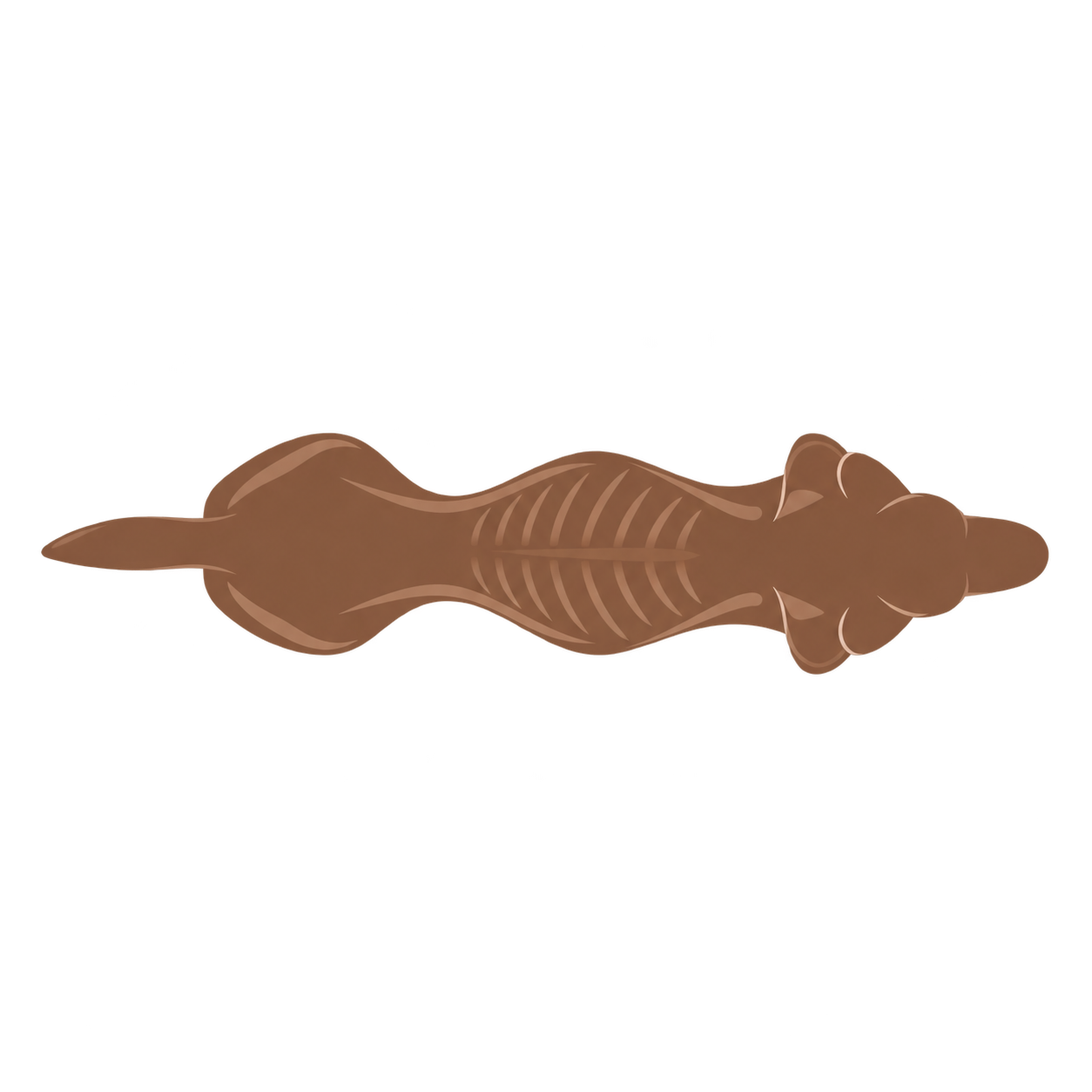
Ribs obvious with no fat over them. Waist and abdominal tuck severe. Hip bones prominent.
Ideal BCS 5/9
Body fat 20–24% · at ideal weight
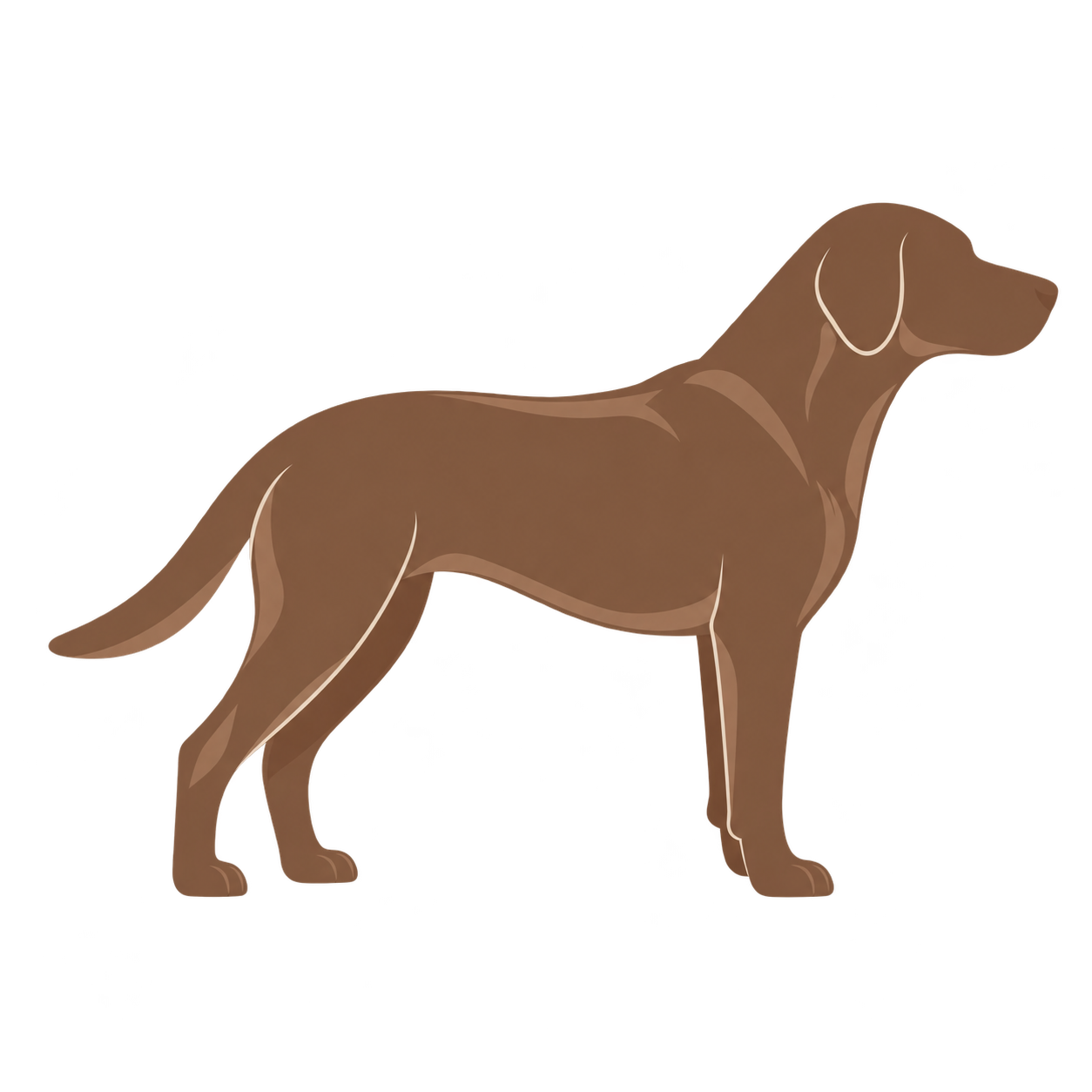
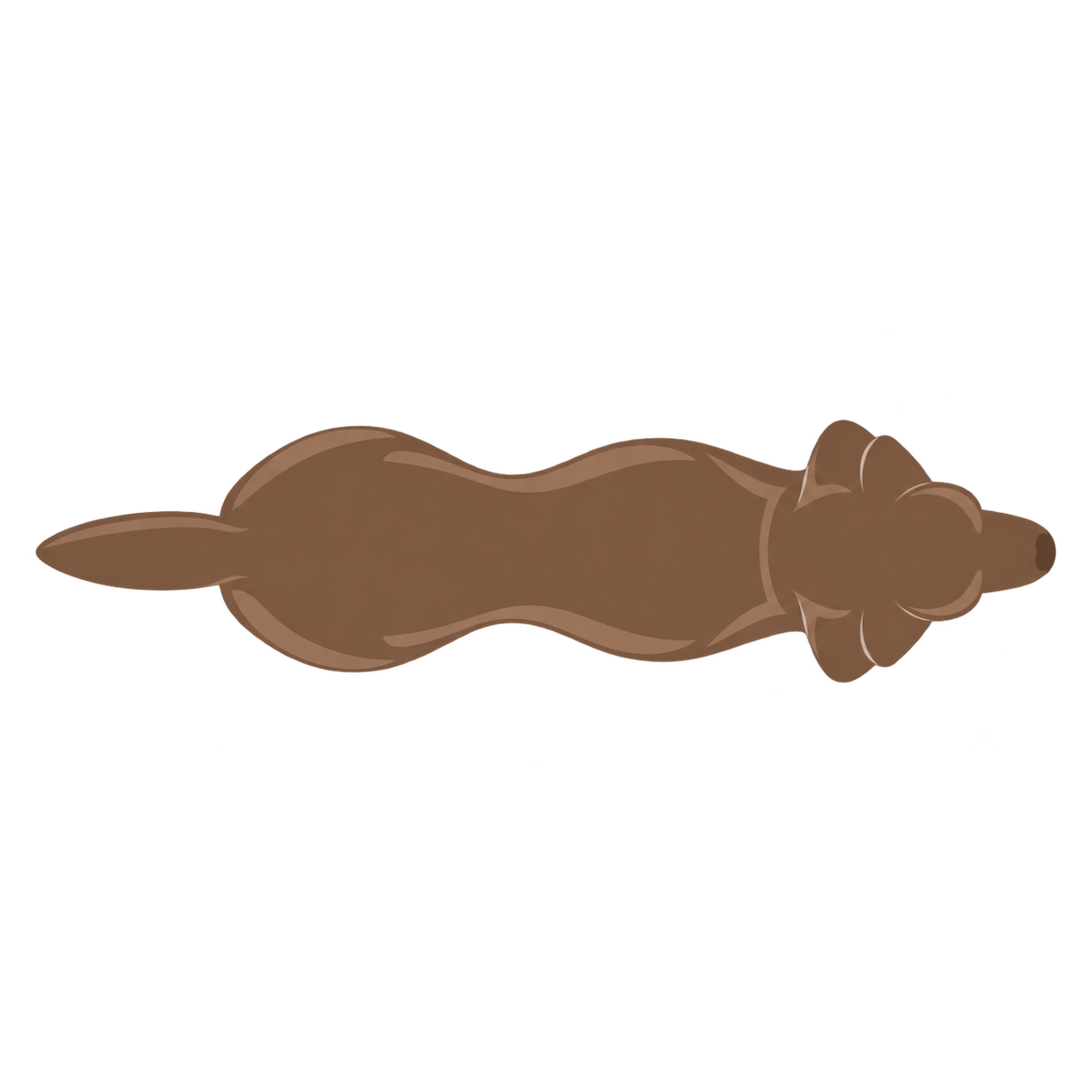
Ribs felt easily under a thin layer of fat. Waist visible behind the ribs from above. Abdomen tucks up from the side.
Slightly heavy BCS 6/9
Body fat 25–29% · +10% vs ideal
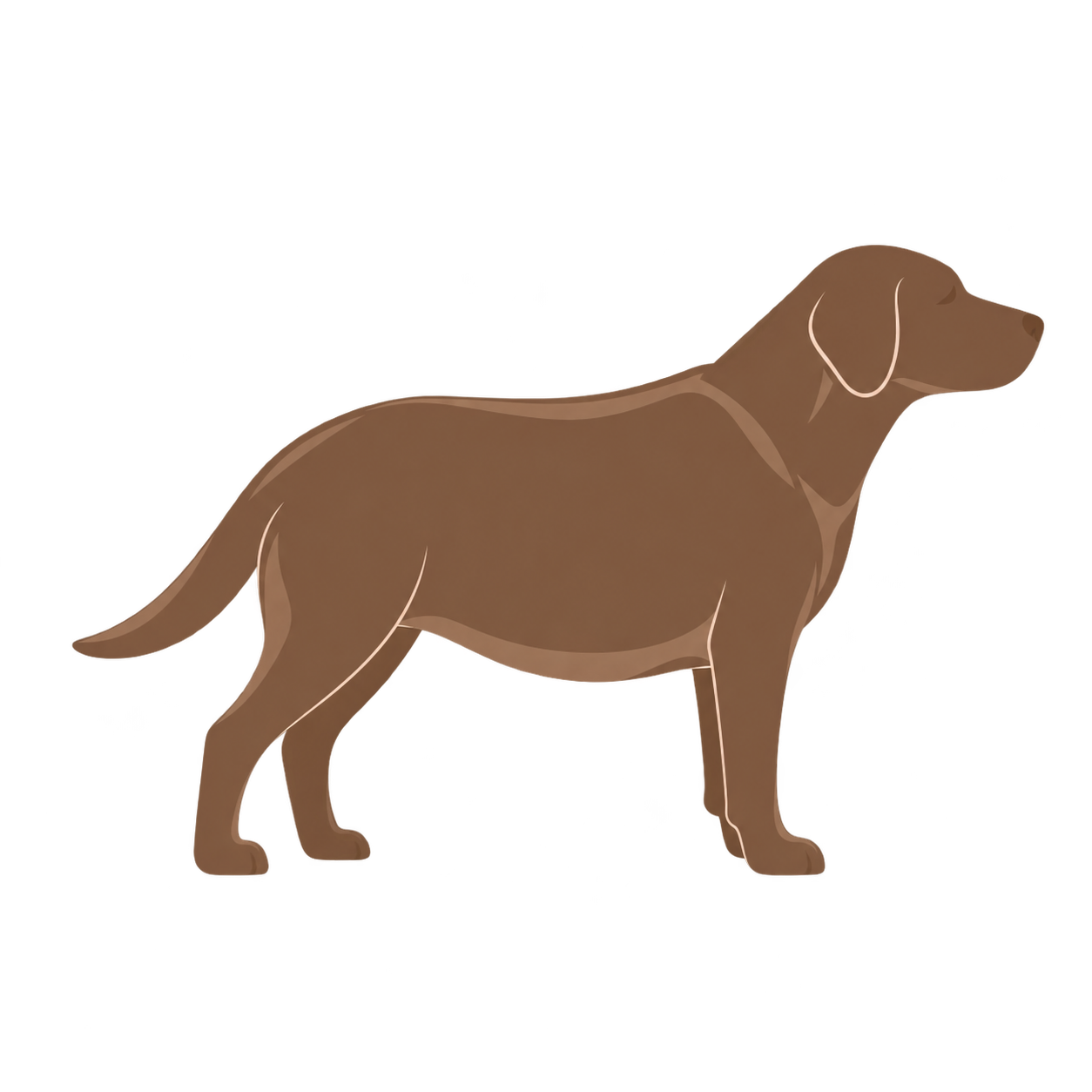
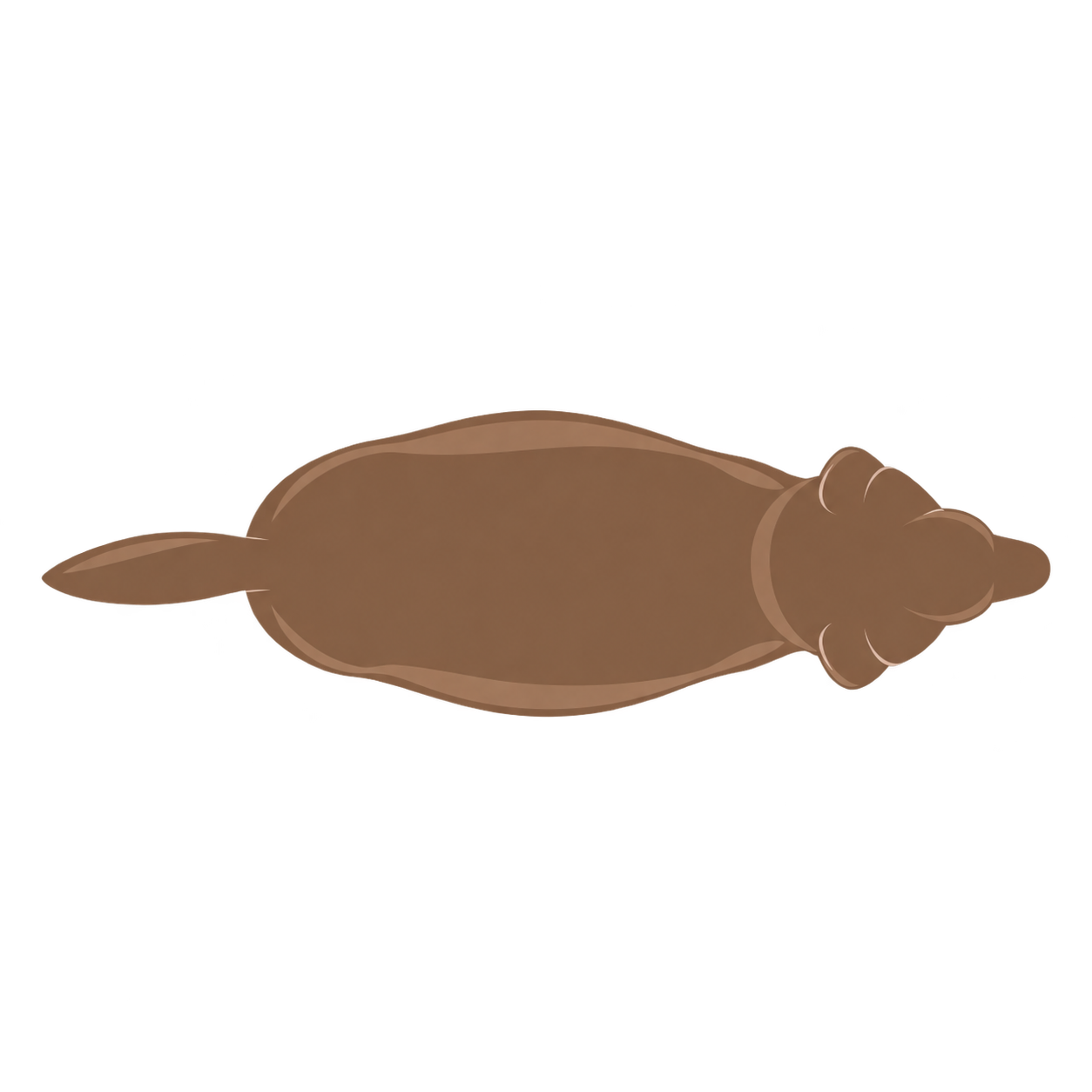
Ribs felt under slight extra fat. Waist still visible from above, but softer and less defined.
Overweight BCS 7/9
Body fat 30–34% · +20% vs ideal
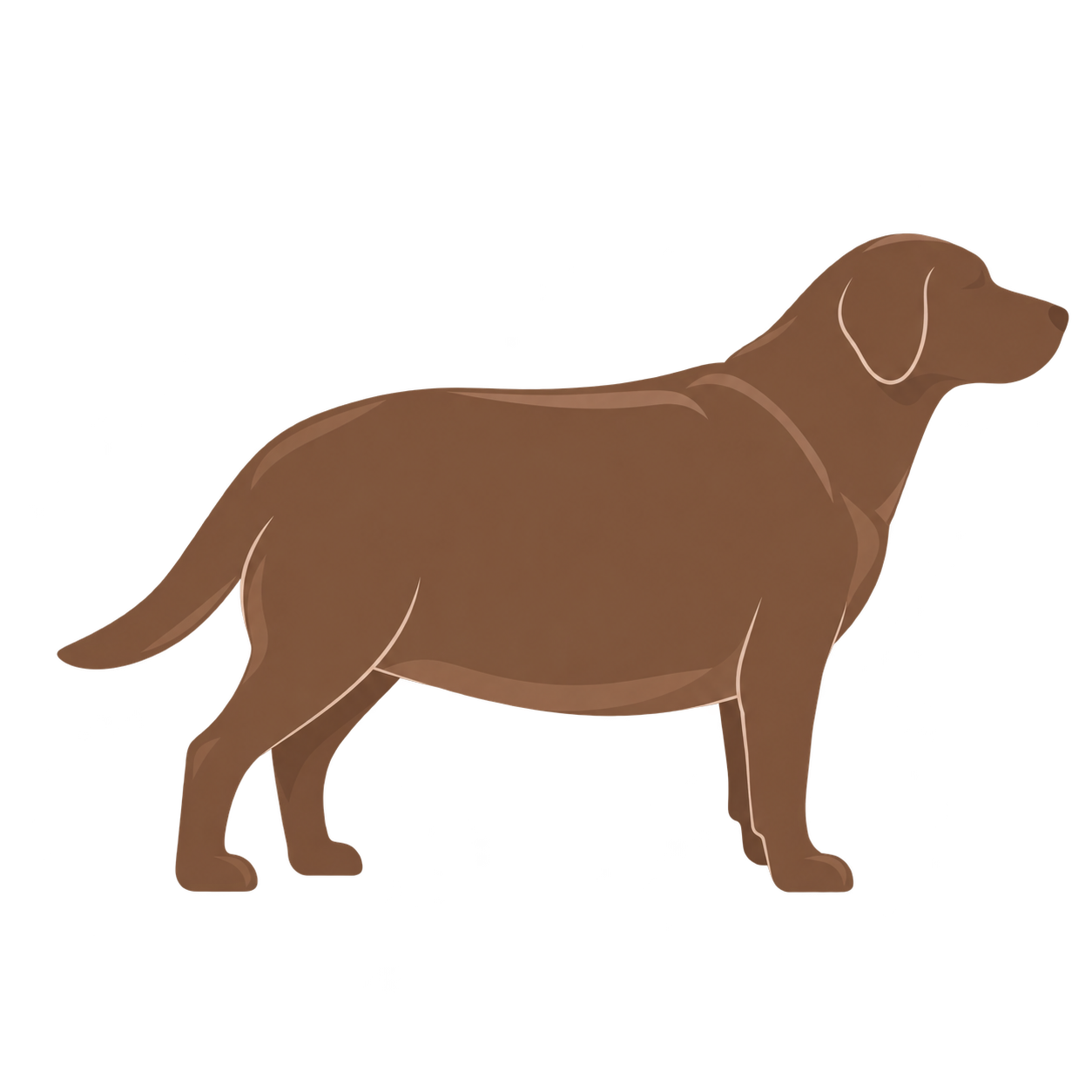
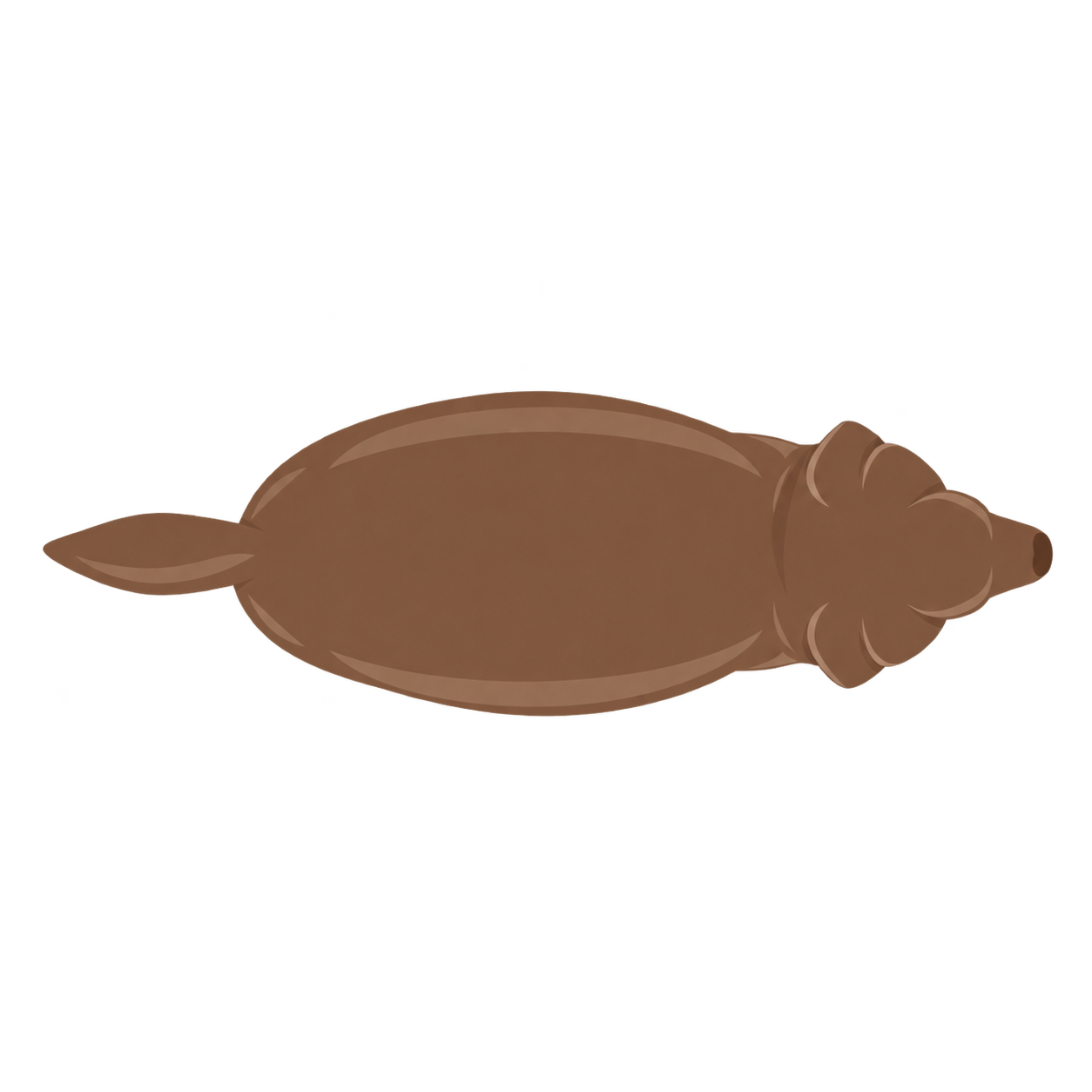
Ribs only felt with firm pressure. Waist barely there. Abdominal tuck reduced or absent.
Obese BCS 8/9
Body fat 35–39% · +30% vs ideal
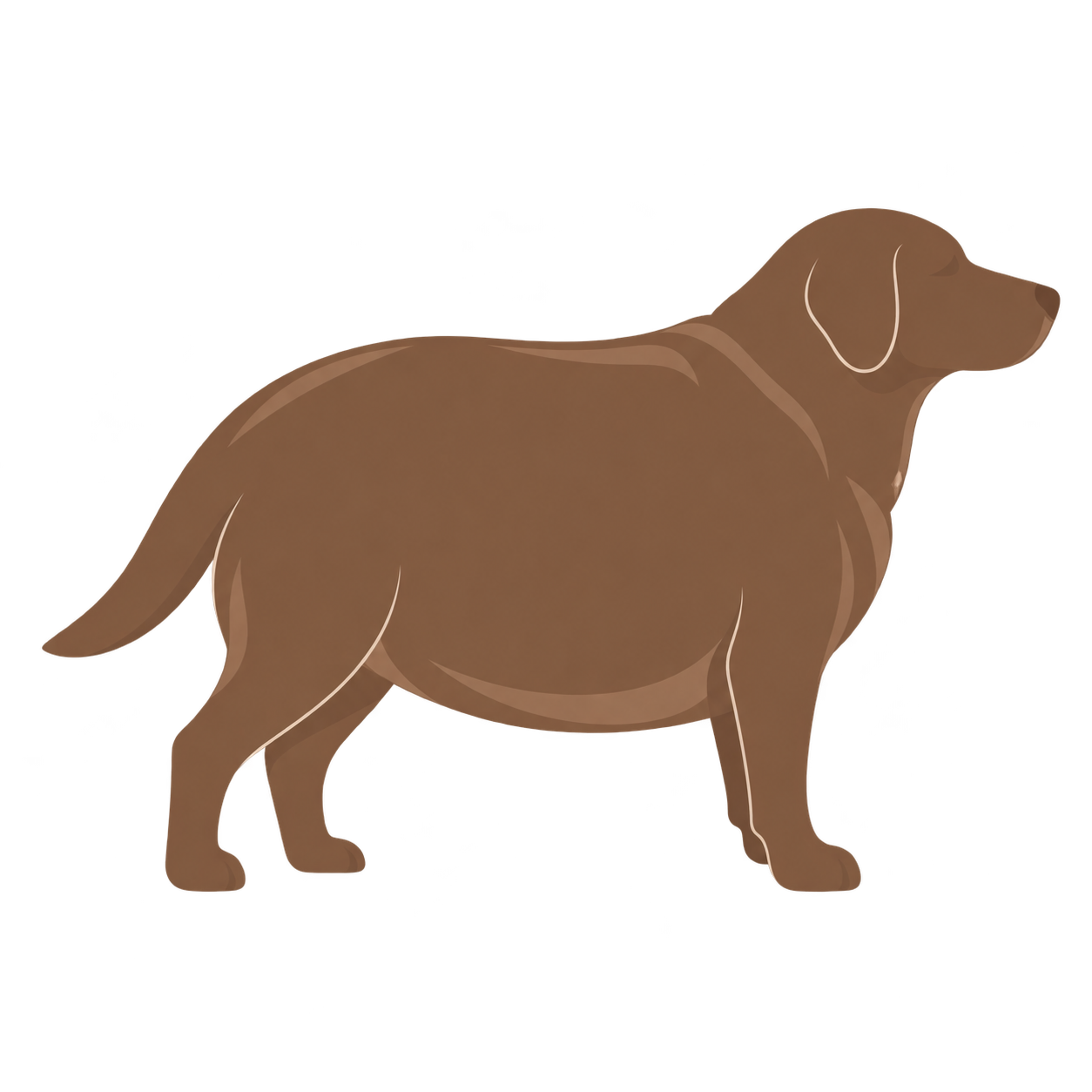
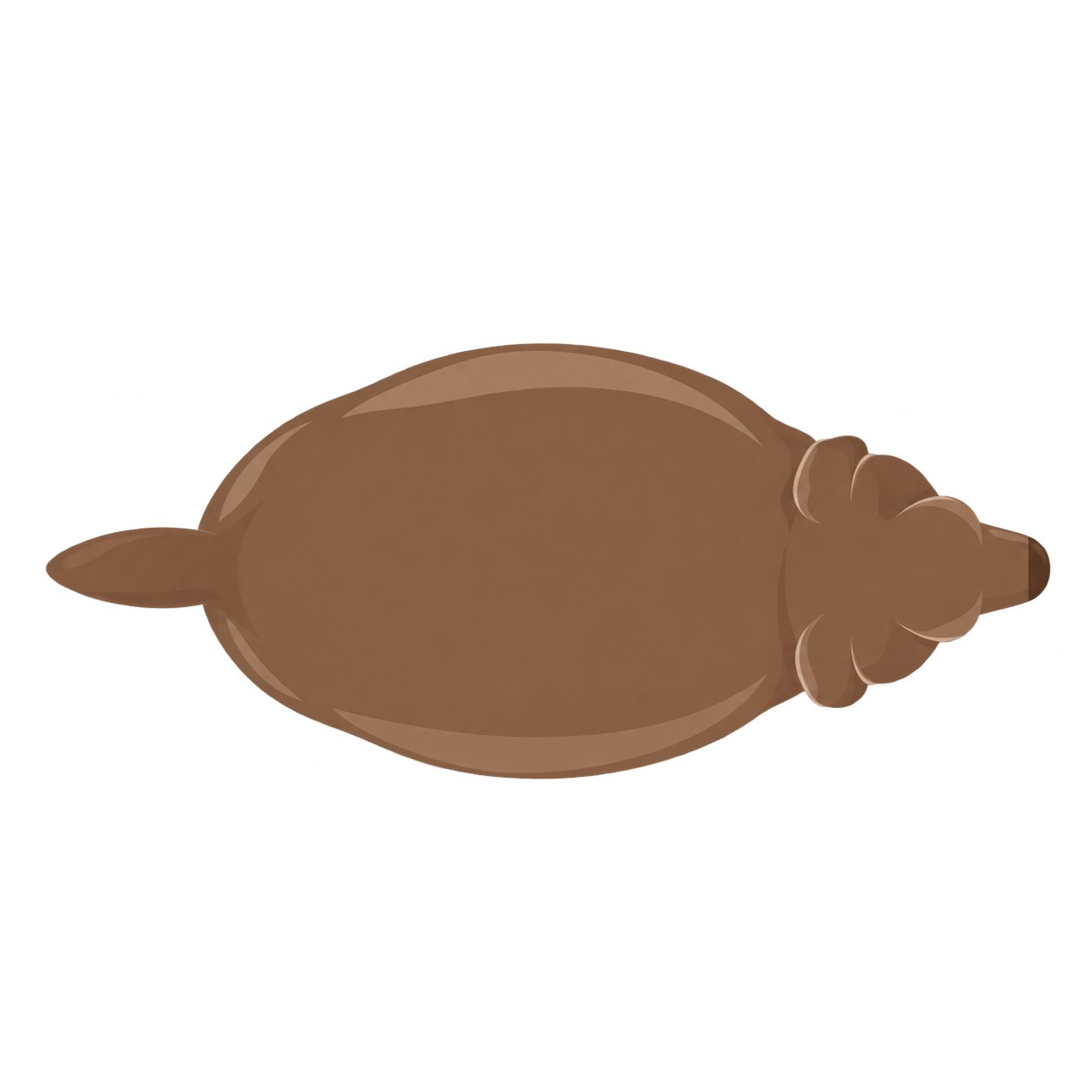
Ribs hard to feel under heavy fat. No waist from above. Abdomen rounded or hanging.
Cats
Cats are not small dogs here. A cat has a primordial pouch — a loose flap of skin and fat along the lower belly that is entirely normal, including in lean cats. Judged against the dog standard, a perfectly healthy cat looks overweight. Assess a cat on ribs and waist, and do not treat a swinging belly flap as evidence of obesity on its own.
Thin BCS 3/9
-20% vs ideal
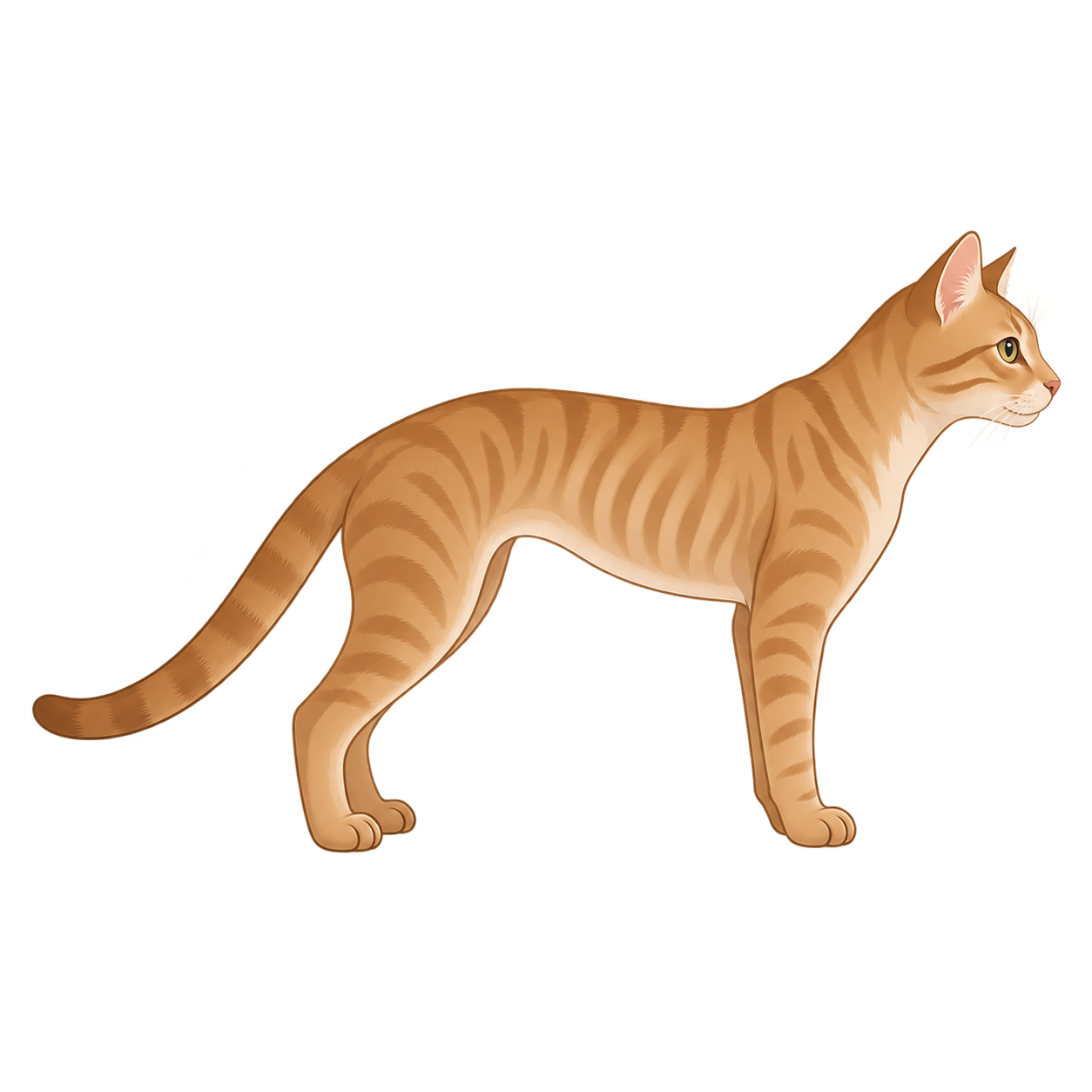
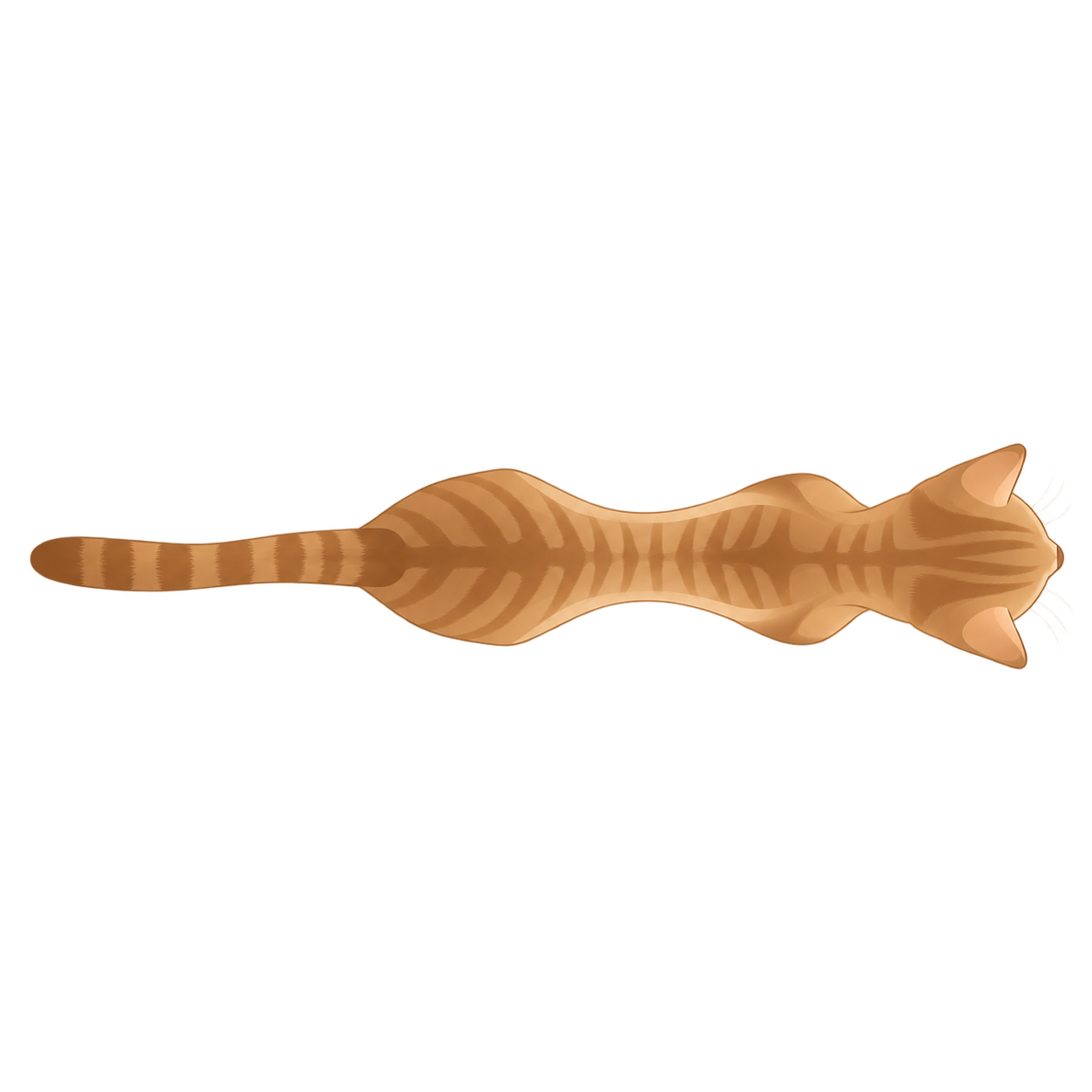
Ribs obvious with no fat over them. Waist and abdominal tuck severe. Hip bones prominent.
Ideal BCS 5/9
Body fat 20–24% · at ideal weight
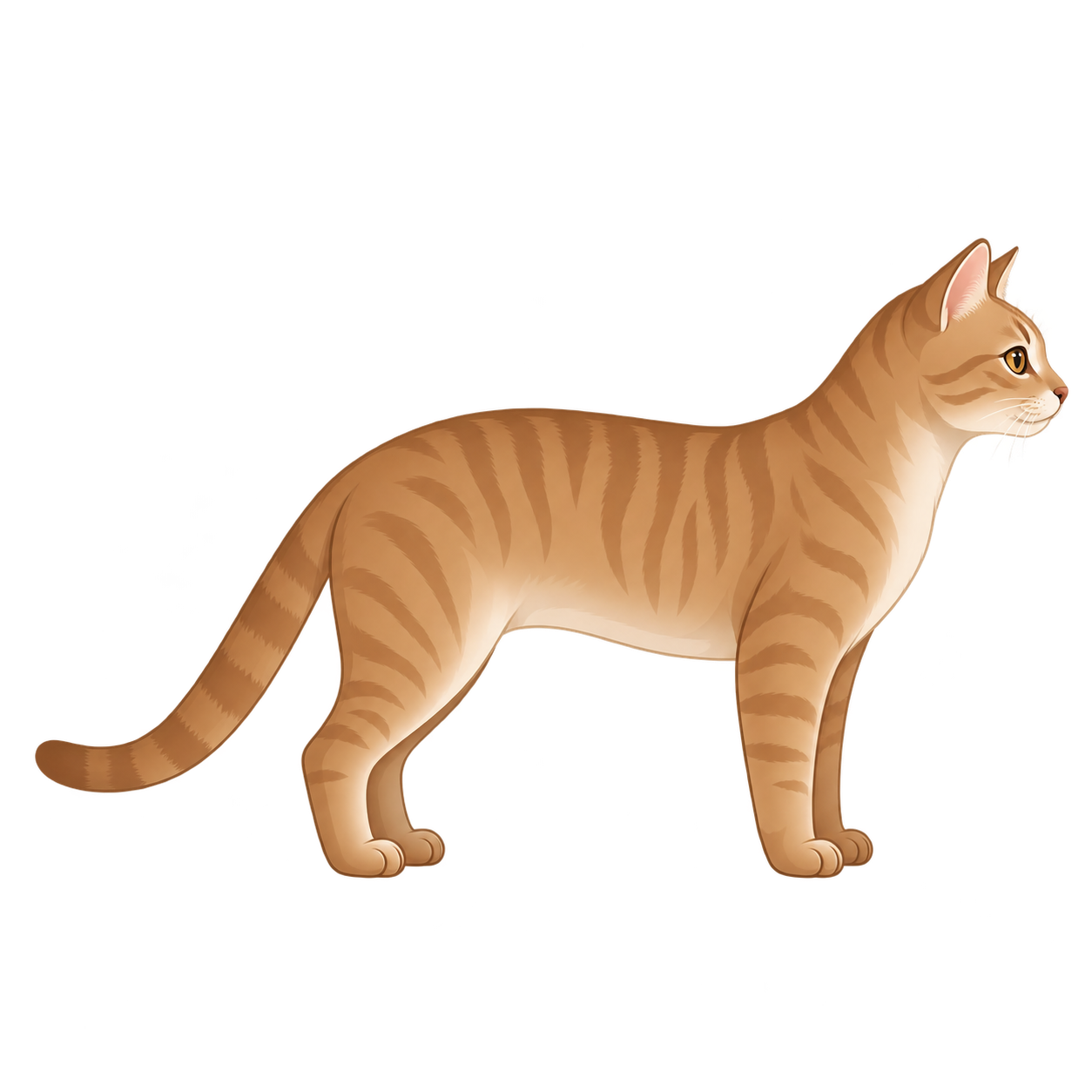
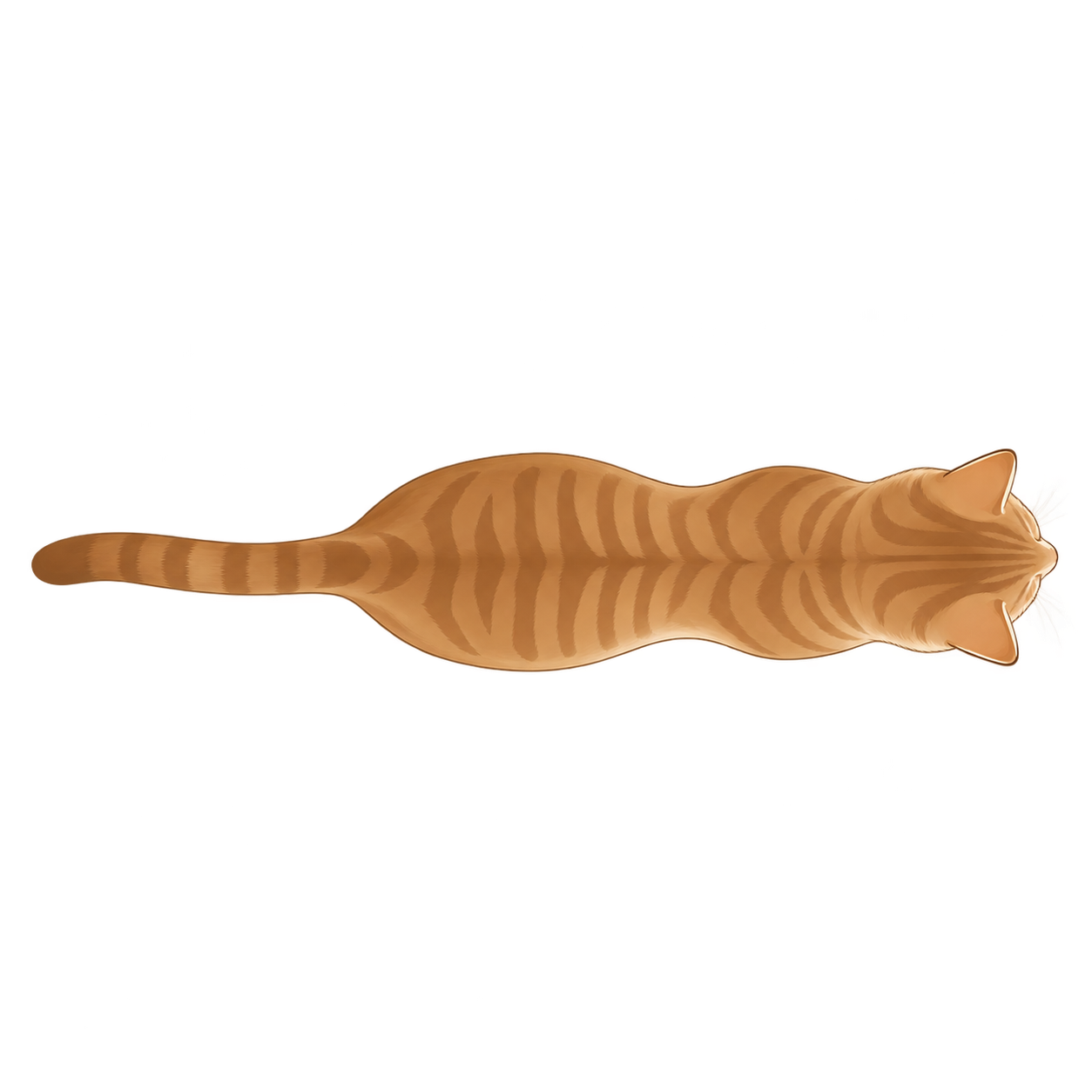
Ribs felt easily under a thin layer of fat. Waist visible behind the ribs from above. Abdomen tucks up from the side.
Slightly heavy BCS 6/9
Body fat 25–29% · +10% vs ideal
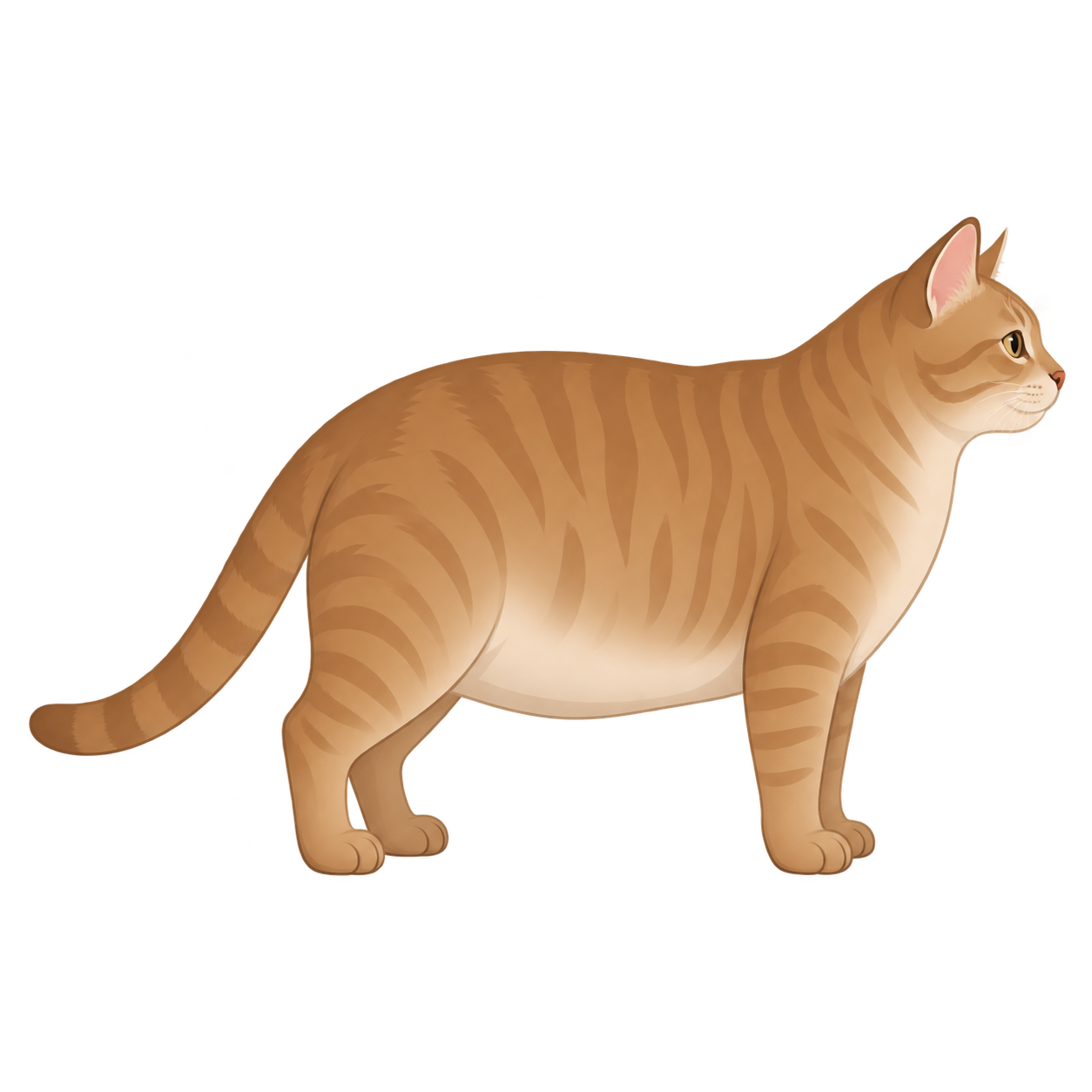
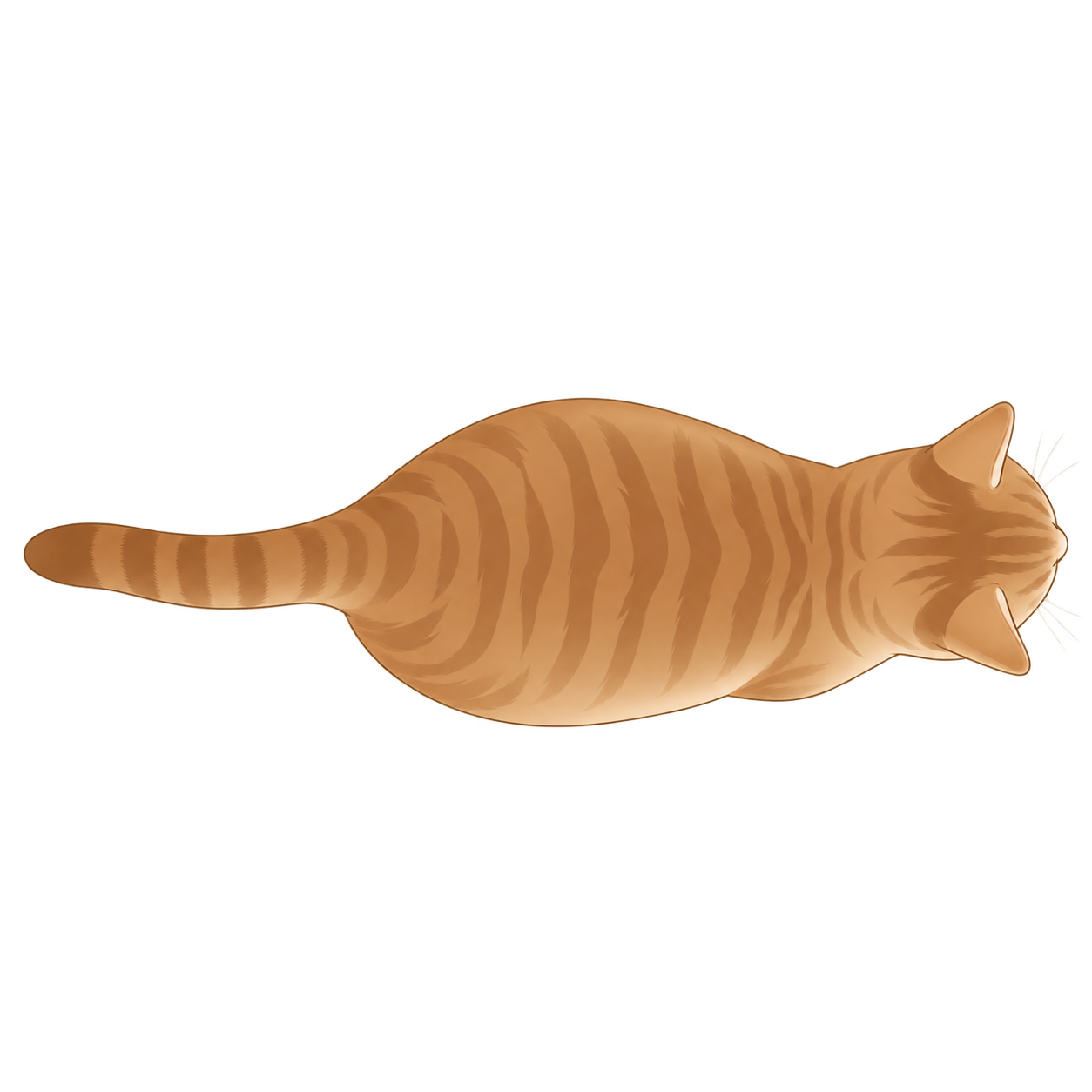
Ribs felt under slight extra fat. Waist still visible from above, but softer and less defined.
Overweight BCS 7/9
Body fat 30–34% · +20% vs ideal
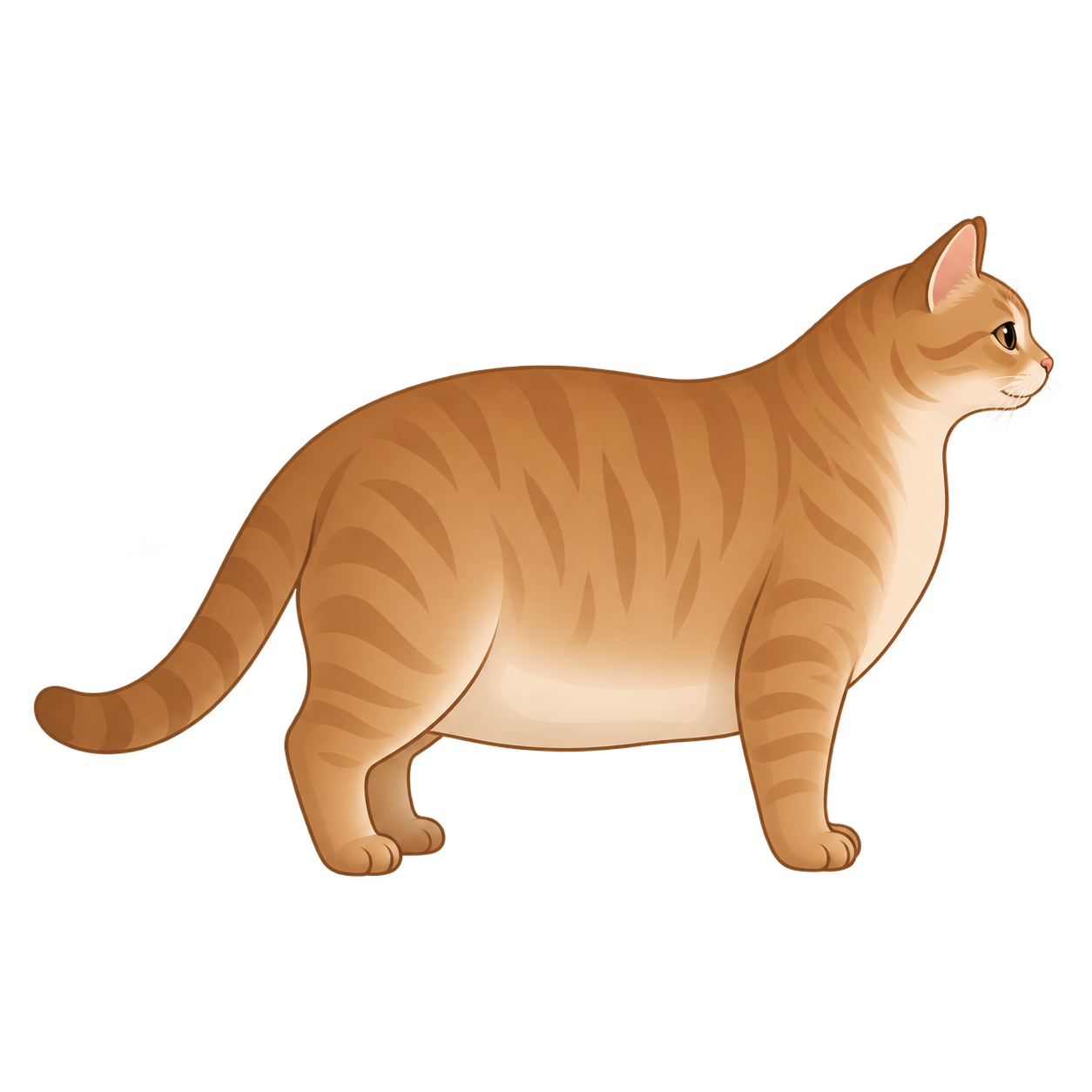
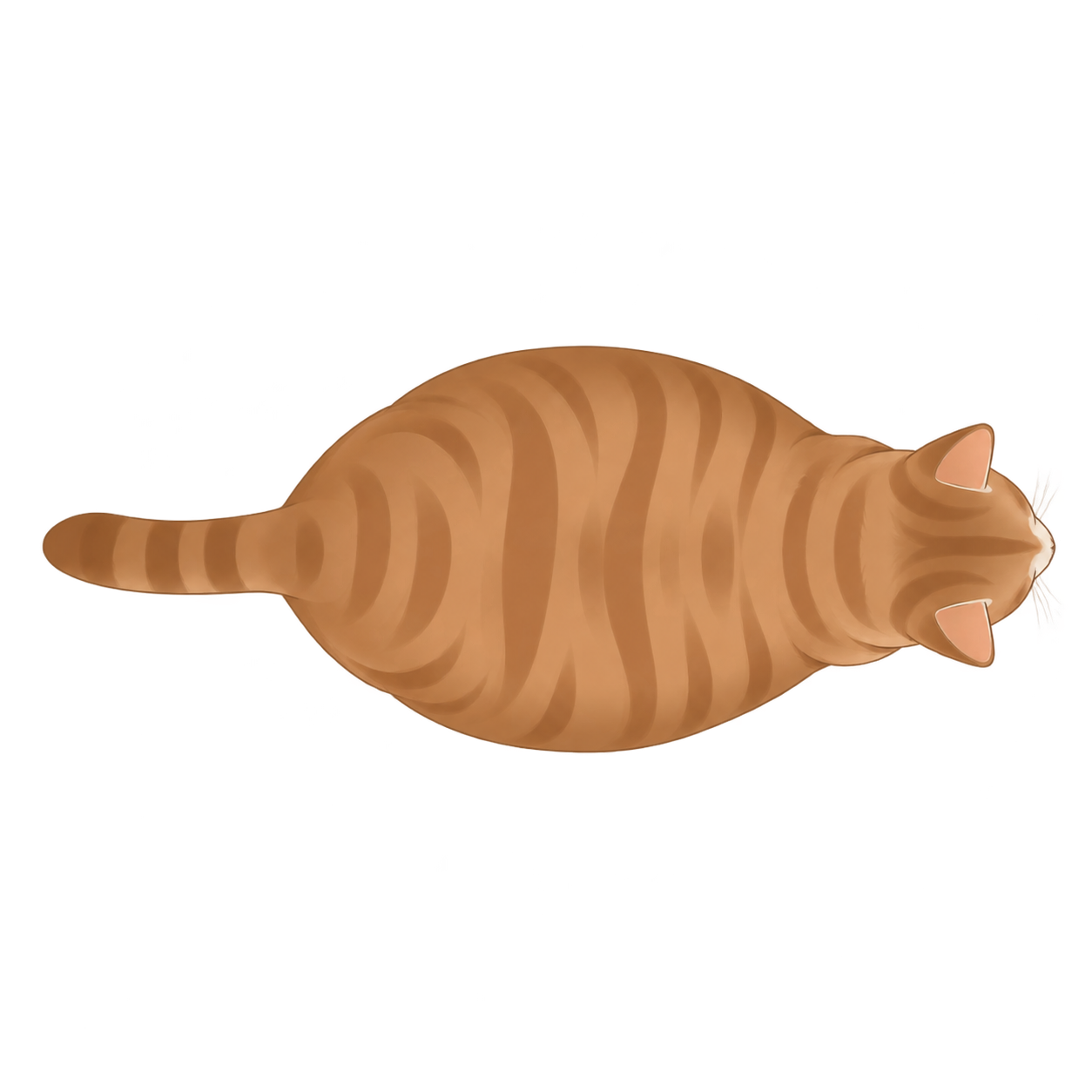
Ribs only felt with firm pressure. Waist barely there. Abdominal tuck reduced or absent.
Obese BCS 8/9
Body fat 35–39% · +30% vs ideal
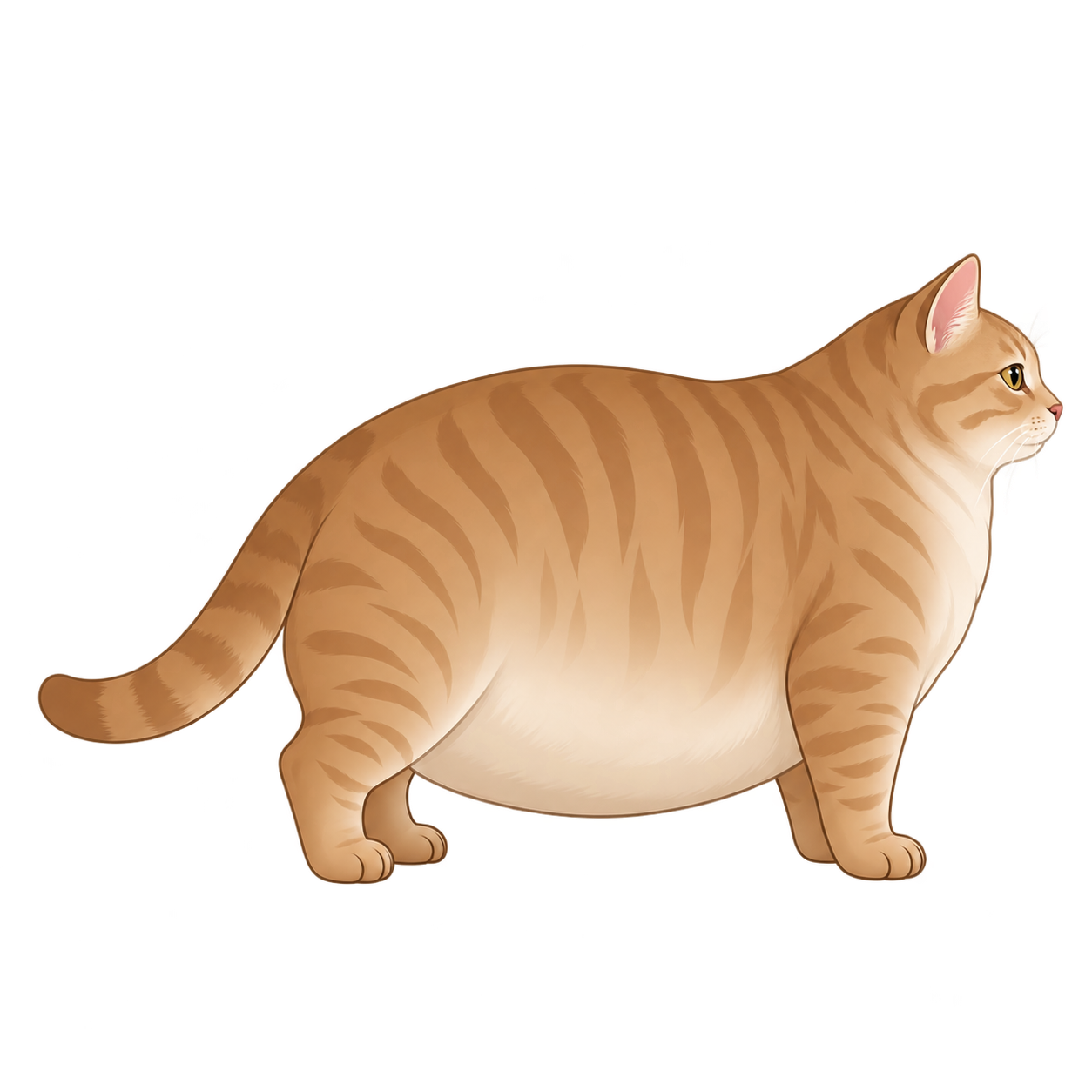
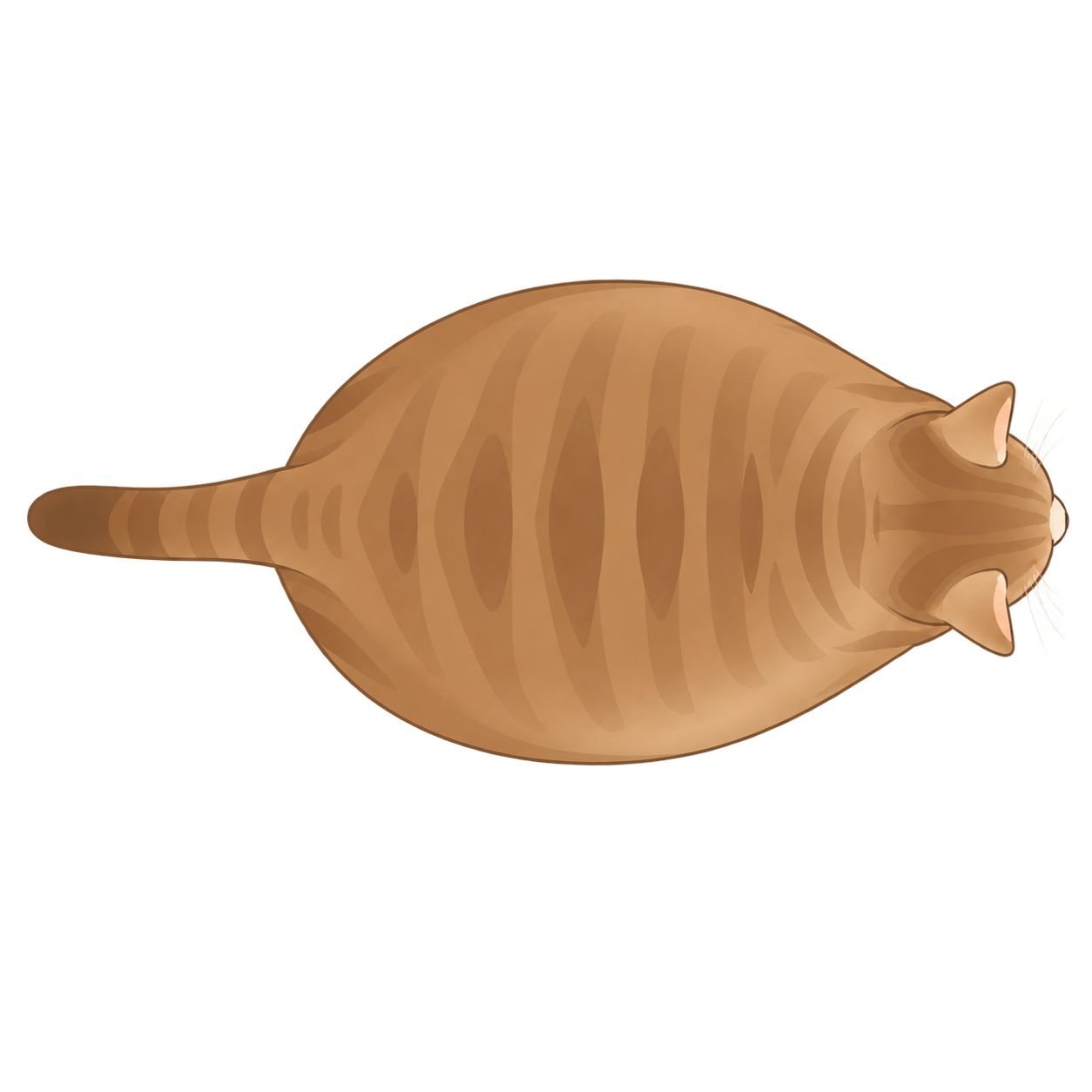
Ribs hard to feel under heavy fat. No waist from above. Abdomen rounded or hanging.
Why the scale runs to 9
The 9-point scale is the version validated against body-fat measurement, and the useful property is that each point corresponds to roughly 10% body fat. BCS 6 is about 10% above ideal weight, 7 about 20%, 8 about 30%, 9 about 40%. Underweight works the same way in reverse.
That relationship is what lets this site do something most calculators don't: instead of asking you to already know your pet's ideal weight, we work backwards to it from the body condition you can actually observe.
Why we only show five options
The calculator exposes five choices — thin, ideal, slightly heavy, overweight, obese — mapping to BCS 3, 5, 6, 7 and 8 internally. That is a deliberate choice, and not the obvious one. Showing 1/3/5/7/9 would look tidier.
The reason: roughly 60% of US dogs are overweight, and in one survey BCS 6 alone accounted for about a quarter of all dogs, with 8% at 7 or above. Owners cluster in the 6–7 band. On a 1/3/5/7/9 scale the only option in that band is 7 — so the owner of a BCS 6 dog, correctly feeling that 7 is too harsh, picks 5, and the entire feature quietly stops working.
- BCS 1–2 are rare and are a veterinary problem rather than a feeding-calculator problem.
- BCS 4 is genuinely hard to tell from 5 by eye, so we fold it in.
- BCS 9 is folded into 8 and carries a warning — above roughly 45% body fat the 9-point scale itself loses discriminating power.
The hard one: ideal versus slightly heavy
If you are unsure between these two, you are in the most common position there is — and it is the distinction that matters most, because it is where the majority of pets actually sit.
The practical tiebreaker is the waist from above. At ideal it is a clear narrowing. At slightly heavy it is still there, but softened — you can see it, you just wouldn't call it defined. Once it disappears entirely you are at 7, not 6.
When to involve a veterinarian
What the action labels mean
- Emergency now —
- contact an emergency veterinary service and arrange immediate assessment. Do not wait for the next scheduled feed or weigh-in.
- Call now for triage —
- telephone the veterinary service when you notice the sign. The veterinarian decides how quickly the animal needs to be seen.
- Contact today —
- get in touch when you notice the issue to agree on a time. This does not mean waiting until evening.
Contact today
Contact today
Got your score? Put it into the dog or cat calculator — it sits under "Refine the estimate". If weight loss is the goal, read safe weight loss first.
Sources
- AAHA 2021 Nutrition and Weight Management Guidelines for Dogs and Cats
- Laflamme DP Development and validation of a body condition score system for dogs. Canine Practice 1997;22(4):10–15
- Pet Nutrition Alliance Calculating Calories Based on Pet Needs